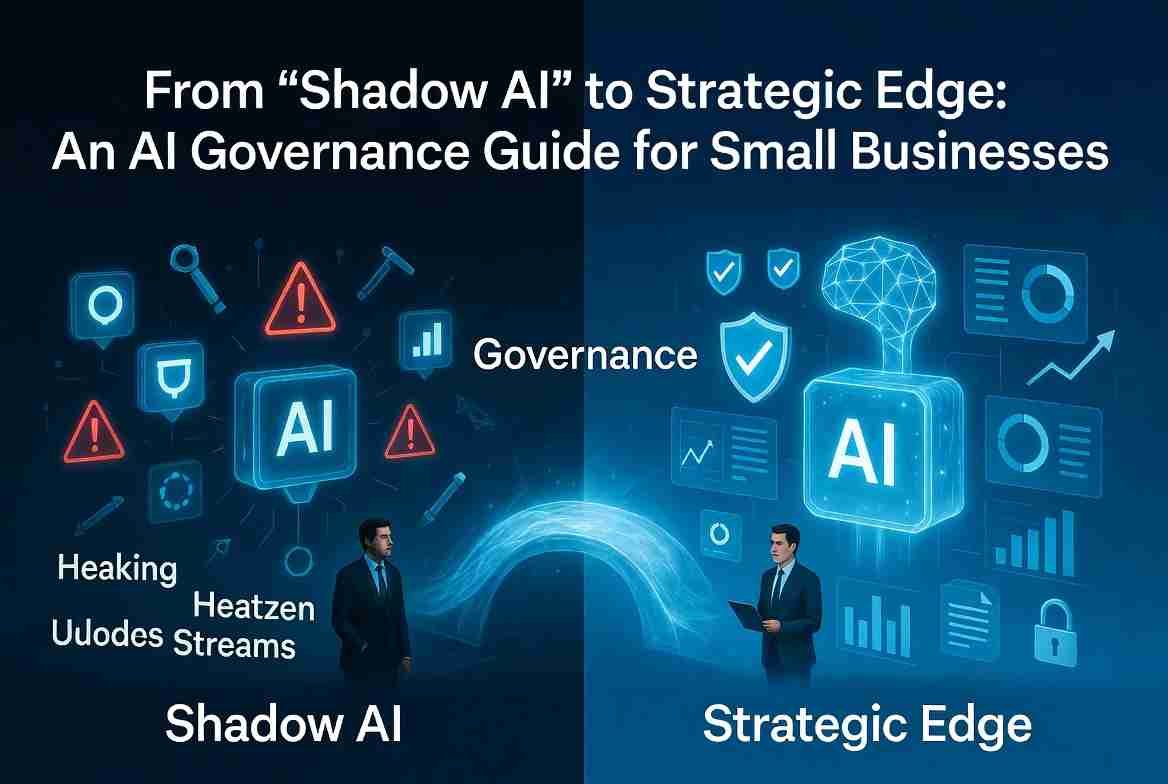
Ever feel like new technology is a wild horse you’re trying to tame? For many small business owners, AI feels exactly like that—powerful, fast, but a little bit unpredictable. You might be using ChatGPT to write emails or an AI tool to sort customer data, but without a plan, you’re running what experts call “Shadow AI”—tools operating in the dark without oversight.
At The Blue Narwhal, we believe AI shouldn’t just be something you use; it should be something you govern. Here is how you can turn AI Governance into your business’s secret weapon.
What is AI Governance (And Why Should You Care?)
Think of AI Governance as the “Employee Handbook” for your digital tools. It’s a structured, eight-step strategy designed to align your business goals with technical and ethical decision-making. For a small business, this isn’t about red tape; it’s about building trust and managing risk effectively.+1
The “Blue Narwhal” Governance Starter Kit
You don’t need a massive IT department to stay secure. Start with these essentials:
- Establish Purpose and Scope: Define why you need governance and what you aim to achieve to ensure it aligns with your broader business goals.
- Create a Central Inventory: Develop a list of every AI system in use to eliminate “shadow AI” and provide the visibility needed for risk assessment.
- Design a Risk Management Framework: Use a risk taxonomy to group systems into High, Medium, or Low risk categories based on data sensitivity and human impact.
- Assign Clear Roles: Define who has the authority for oversight, from model owners managing the lifecycle to those validating risks.
- Implement Policies and Standards: Convert your goals into enforceable guidance that establishes ethical expectations and technical controls like bias testing.
The Strategic Edge: Why Governance Wins
When you have a framework in place, you aren’t just “using AI”—you’re building a reputable brand.
- Trust and Authority: Including clear citations, statistics, and expert quotes in your AI-related content builds authority and trustworthiness with both humans and AI engines.
- Continuous Improvement: By regularly reviewing and updating your processes, you ensure your framework remains adaptive to new regulations or shifting goals.
- Real-Time Accountability: Using audit trails and monitoring allows you to catch performance “drift” or bias before it impacts your customers.
“Governance isn’t about slowing down; it’s about building a car with brakes so you can safely drive faster.”
🐋 The Blue Narwhal Takeaway Tip
Action Item: This week, start your AI System Register. List every AI tool your team uses, what data it accesses, and what its specific purpose is. This single step puts you ahead of the curve in AI maturity.
The AI Policy template found at thebluenarwhal.com offers full customization to your specific business needs; contact us to find out more about securing your strategic edge.